Gravity: A Nervous System Survival Story About Clutter, Hoarding, and Release
Why We Wrote This
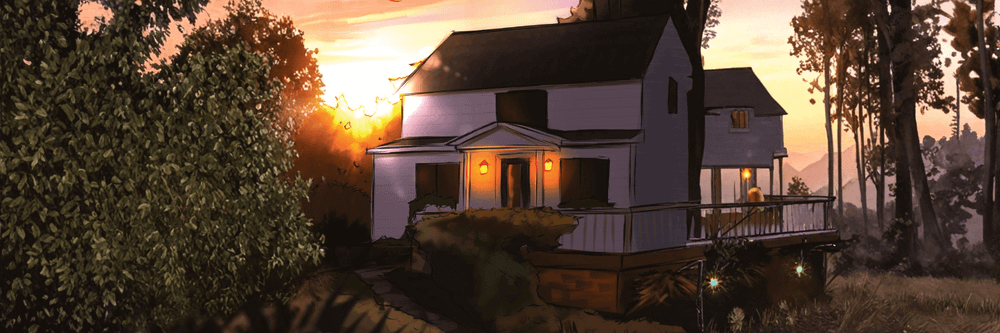
The Old House did not have electricity.
That’s the first thing you notice when you step inside—how quiet it is without the hum. No refrigerator. No lights clicking on. No reassurance from machines that things are being kept cold, kept bright, kept under control.
Just air. Old air. Dust you can taste before you can name it.
The floorboards bow in places where generations walked the same path. Your boots leave prints immediately. Not because the place is filthy in a dramatic way, but because it has been undisturbed long enough for the dust to feel proprietary.
You are already dirty. Sweat has glued your shirt to your back. Your hands are black at the creases. You are cross in the way only exhaustion makes possible—cross beyond politeness, beyond patience, beyond the tidy language people use to describe difficult days.
This is a week out of time. A day out of history.
And then you see them.
Wooden spools.
Not a few. Not a stack.
Hundreds.
They are piled against one wall like a collapsed city. Thick wooden rims. Iron cores. Some smooth from handling, others splintered just enough to catch the pad of your thumb. You count them without meaning to.
Four hundred and thirty-two.
You know the number because the mind does that when it needs an anchor. When the rest of the place is too much.
You pick one up.
It fits in your palm with authority. Heavy. Purpose-built. You turn it slowly, feeling the grooves worn by years of wire or thread or rope that mattered once. Someone ordered these in bulk. Someone stacked them carefully. Someone expected to need them again.
You think: I’d like to keep these.
The thought surprises you. You don’t need them. You don’t know what you’d do with them. But your body makes a small, unmistakable claim.
Then a sound.
A skittering that snaps you upright, heart already climbing before your mind catches up. From the corner of your eye, a mouse appears—brown, quick, competent. She stops just long enough for you to register the impossible thing she is doing.
She is carrying three babies on her back.
Not in her mouth. Not dragging them. Balanced. Intentional. A mother with a system.
She disappears around the corner, and the house goes quiet again.
You stand there holding the spool, dust in your lungs, sweat cooling on your spine, anger flickering into something else. Respect, maybe. Or recognition.
Why were the spools kept?
Not because they were trash.
Not because no one got around to it.
Not because the person who lived here “couldn’t let go.”
They were kept because they were useful once.
Because they represented preparedness.
Because they said: I will be ready when the line needs to be run again.
The mouse did not hoard her babies.
She carried them.
The house did not fail.
It held.
That day, standing in a powerless house full of wooden spools and living mothers doing what they could, something settled into place.
Clutter is not random.
Accumulation is not accidental.
And survival leaves artifacts.
We wrote Gravity because we have stood in rooms like this—dirty, tired, overwhelmed by the weight of what remains—and felt the lie snap in half.
These are not broken people.
These are not shameful spaces.
These are systems that worked under pressure and never stood down.
You don’t “fix” that.
You witness it.
You respect it.
And when the time comes, you help it change without pretending it was ever worthless.
That is why this book exists.
Because someday, you will hold an object in your hand—dusty, heavy, unnecessary—and feel the truth before the story arrives.
And when you do, we want you to know:
You were never the mess.
You were the evidence.